Unlocking Creativity: How Dada’s Automatic Drawing Connects to Mindfulness and Mental Health
Aug 30, 2024
**Introduction:**
As an artist who draws inspiration from the Dada movement, I often find myself reflecting on how the concept of *automatic drawing*—first explored by artists like André Masson and Hans Arp—ties into the modern practice of mindfulness. In today’s fast-paced world, more people are turning to art as a form of self-expression and emotional healing. Automatic drawing, with its emphasis on spontaneity and the subconscious, offers a unique avenue for both creativity and mental wellness. In this post, we’ll explore the connections between Dada’s automatic drawing, mindfulness, and how these practices can support mental health.
**The Origins of Automatic Drawing in Dada Art:**
Dadaism was born in the chaotic years of World War I, when artists and thinkers sought to disrupt traditional forms of expression. Automatic drawing, where the hand moves freely without conscious thought, became a cornerstone of this movement. Dada artists believed that by relinquishing control, they could access deeper parts of the mind—tapping into creativity that lies beyond logic and reason. This practice allowed artists to produce abstract and often surprising compositions, reflecting the subconscious mind in its raw form.
**Automatic Drawing as a Tool for Mindfulness:**
What is most striking about *automatic drawing* is how closely it parallels the concept of mindfulness. In both practices, the goal is to be fully present, letting go of preconceived notions and embracing the flow of the moment. When I engage in automatic drawing, I find myself entering a state of *flow*—a meditative experience where the boundaries between thought and action dissolve. Each stroke of the marker or brush becomes a natural extension of the mind’s spontaneous impulses.
Mindfulness is about being aware of your thoughts and surroundings without judgment. Similarly, automatic drawing allows the artist to observe their inner world without the need to control or censor. This process can be deeply therapeutic, offering an outlet for emotions and thoughts that may be difficult to express through words. By embracing the randomness and unpredictability of the art form, we create space for emotional healing and mental clarity.
**Art Therapy and Mental Health Benefits:**
Incorporating automatic drawing into one’s life can provide a valuable tool for *mental health.* Whether you’re an artist or someone looking for a creative outlet, this technique encourages self-expression in a non-judgmental, supportive way. Studies in art therapy have shown that engaging in creative activities—especially abstract forms like automatic drawing—can help reduce stress, anxiety, and depression. By focusing on the process rather than the outcome, individuals can let go of perfectionism and embrace the joy of creation.
For those dealing with mental health challenges, automatic drawing offers a way to *externalize inner struggles* and emotions. By allowing the subconscious mind to take over, this practice creates a bridge between thoughts and physical expression, facilitating a form of self-discovery.
**How I Use Automatic Drawing in My Own Artistic Practice:**
As an artist working primarily with acrylic and ink markers (Molotow, Copic and Sharpie), I use automatic drawing to free my mind from the constraints of perfectionism. For the majority of my abstract artwork, the approach is to start with no plan—letting the lines, shapes, and colors unfold organically. Often, I find that the images which emerge carry unexpected meaning, symbolizing thoughts or emotions I hadn’t consciously recognized.
In my view, this form of drawing is an ongoing dialogue between the mind and the hand. The result is always abstract, often intricate, and sometimes even surreal. For me, this practice not only boosts my creativity but also fosters a sense of calm and mental clarity. It’s a reminder that art can be a meditative practice, one that helps us reconnect with ourselves in a world filled with distractions.
**Conclusion:**
Automatic drawing, once the domain of Dada artists, offers a powerful intersection of art, mindfulness, and mental health. Whether you’re looking to unleash your creativity, engage in mindfulness, or improve your mental well-being, this form of drawing is a valuable practice that encourages spontaneity and emotional exploration. Through embracing the unpredictable nature of the subconscious, automatic drawing reveals the beauty of letting go—a concept that holds relevance not only in art but also in our approach to life.
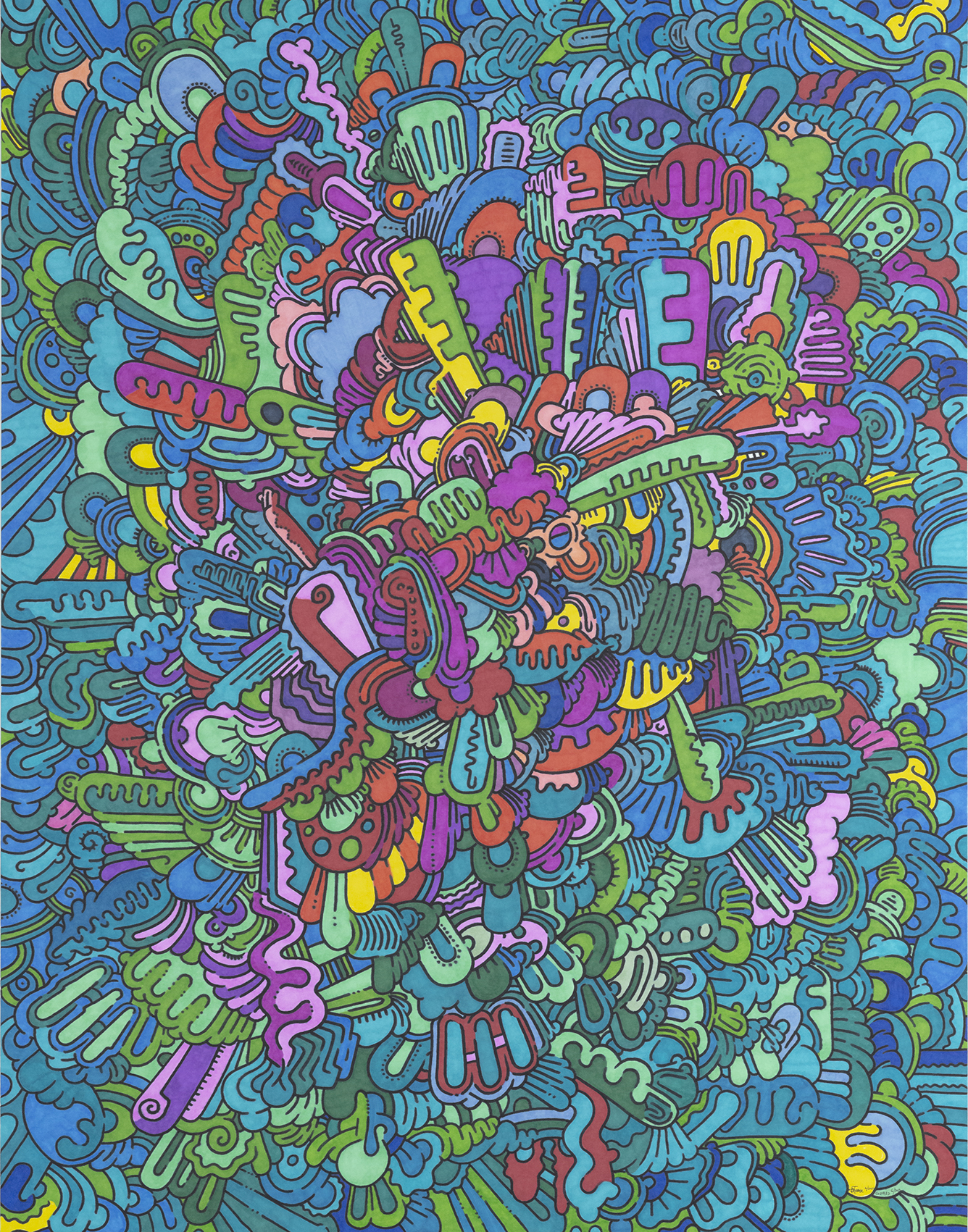
Automatic Drawing Above: "Tri-Color Wall Motion," 22"x28, Sharpie Marker On Paper
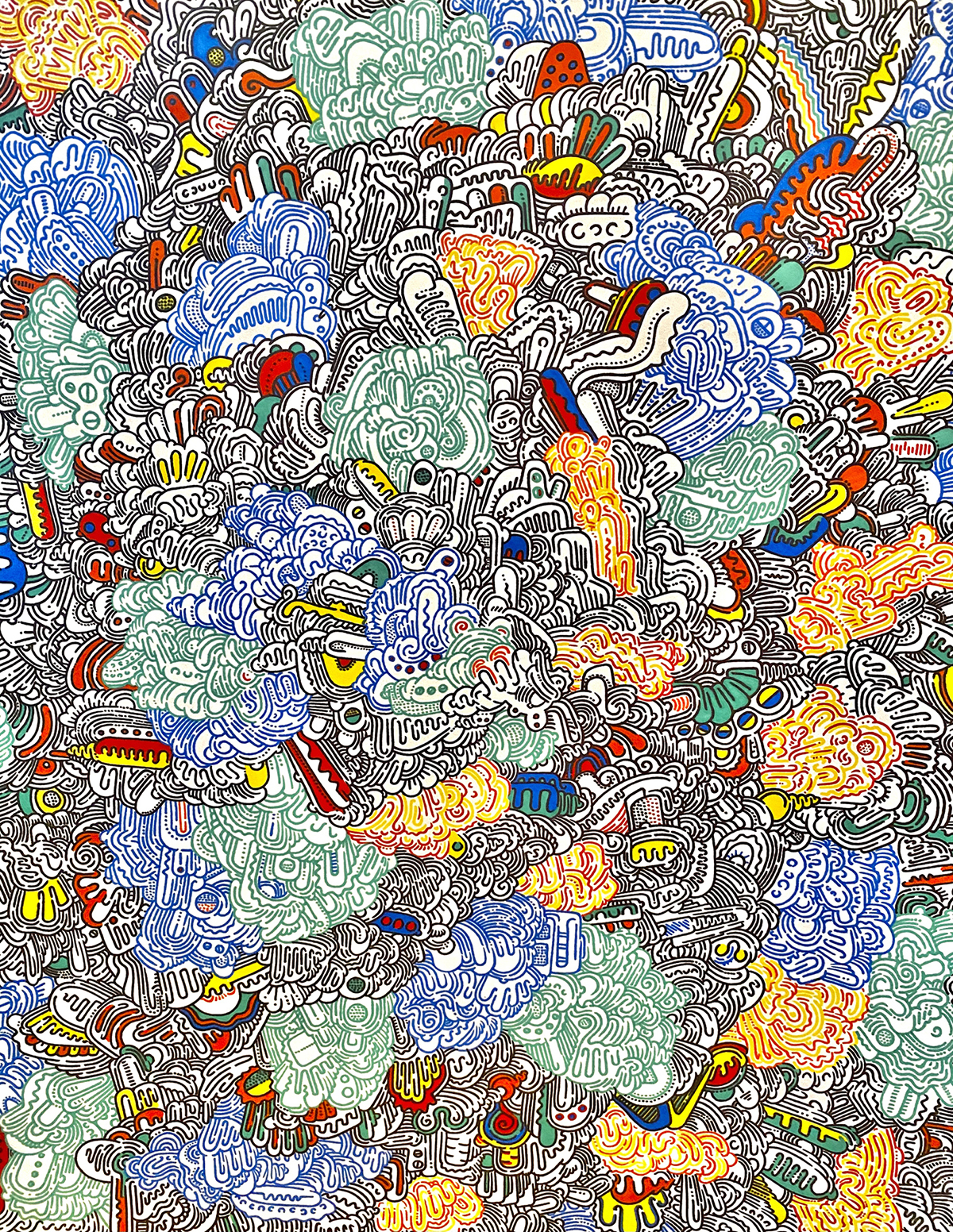
Automatic Drawing Below: "Electro Nuclear Super Force," 22"x28, Sharpie Marker On Paper